Satoru Isaka, Ph.D.
Machine Autonomy
My research topic is machine autonomy and developmental autonomous behavior. I've been exploring the principles and mechanisms that enable machines to acquire new skills autonomously without human intervention. See [1] for research outline, and [2]-[6] for my peer-reviewed publications on this work.
Unlike artificial intelligence, cognitive science, and robotics, which predominantly focus on understanding human cognition and replicating human capabilities, my research is dedicated to examining autonomy from the machine's own perspective. The goal is not to mirror human cognition but to uncover the fundamental systems and processes that govern autonomous machine behavior.
This topic has a significant societal impact but is underappreciated. After three decades of solving real-world problems in the automation industry, I've been concerned with the fundamental issues in integrating autonomy into automation, which are related but distinct concepts. Granting autonomy to machines is a choice by humans, yet its implications are far more profound than most realize.
To articulate and address the issues comprehensively, I've constructed a fundamental, philosophical framework as well as an empirical, epistemic framework that captures embodied and ephemeral experience in a non-human context.
[1] S. Isaka, "Research Outline: Machine Autonomy and Developmental Autonomous Behavior," Internal report, August 7, 2025. Older version in public domain: doi: 10.13140/RG.2.2.20288.24325
[2] S. Isaka, "Taxonomic Robot Identifiers: Toward General Classification and Oversight for Autonomous Systems," in IEEE Access, vol. 13, pp. 101801-101816, 2025, doi: 10.1109/ACCESS.2025.3578870
[3] S. Isaka, "A Taxonomic Classification and Identification System for Robots: Abstract," in Proc. 2024 IEEE International Conference on Systems, Man, and Cybernetics (SMC), Kuching, Malaysia, 2024, pp. 3799-3800, doi: 10.1109/SMC54092.2024.10831650
[4] S. Isaka, "Autonomy in Cognitive Development of Robots: Embracing Emergent and Predefined Knowledge and Behavior," in Proc. 2024 IEEE 20th International Conference on Automation Science and Engineering (CASE), Bari, Italy, 2024, pp. 1353-1360, doi: 10.1109/CASE59546.2024.10711540
[5] S. Isaka, "An Ethological Analysis of Developmental Behavior in Machines," in Proc. 2023 IEEE International Conference on Development and Learning (ICDL), Macau, China, 2023, pp. 79-86, doi: 10.1109/ICDL55364.2023.10364472
[6] S. Isaka, "Developmental Autonomous Behavior: An Ethological Perspective to Understanding Machines," in IEEE Access, vol. 11, pp. 17375-17423, 2023, doi: 10.1109/ACCESS.2023.3246840
[7] S. Isaka, "Philosophical Foundations of Machine Autonomy: What It Means To Grant Autonomy To Machines Part 1: Introduction and First Query," Preprint in ResearchGate, May 9, 2025, doi: 10.13140/RG.2.2.10280.48643
[8] S. Isaka, "Critique of Emerging Linguistic Centralism: How Language Distorts Our Understanding of AI and Humanity," Preprint in ResearchGate, August 4, 2025, doi: 10.13140/RG.2.2.27676.96643
Biography
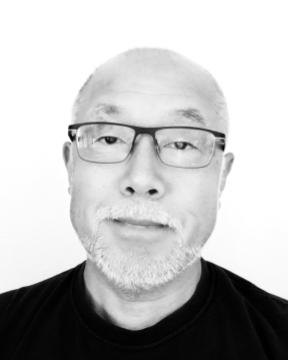
Satoru Isaka received his B.S., M.S., and Ph.D. degrees in systems science from the University of California, San Diego, in 1984, 1986, and 1989, respectively. His original research focused on adaptive control systems and artificial intelligence. From 1990 to 1998, he was a research scientist at OMRON in factory and healthcare automation. From 1998 to 2004, he served as Chief Technology Officer and Chief Scientist in the fields of service automation, natural language processing, speech automation, and data analysis automation at venture startups in the San Francisco Bay Area. In 2004, he founded Vision Del Mar, LLC. where he continues his research.
Personal Life and Views
Satori-no-Tabi - 8,000 Miles of Solo Zen: Exploring American West on Secondary Roads
The Blueprint for Sustainable Weight Management
Concerns on Algorithmic Medicine
From Aristotle to AI and Robotics: A Historical Perspective Beyond Large Language Models
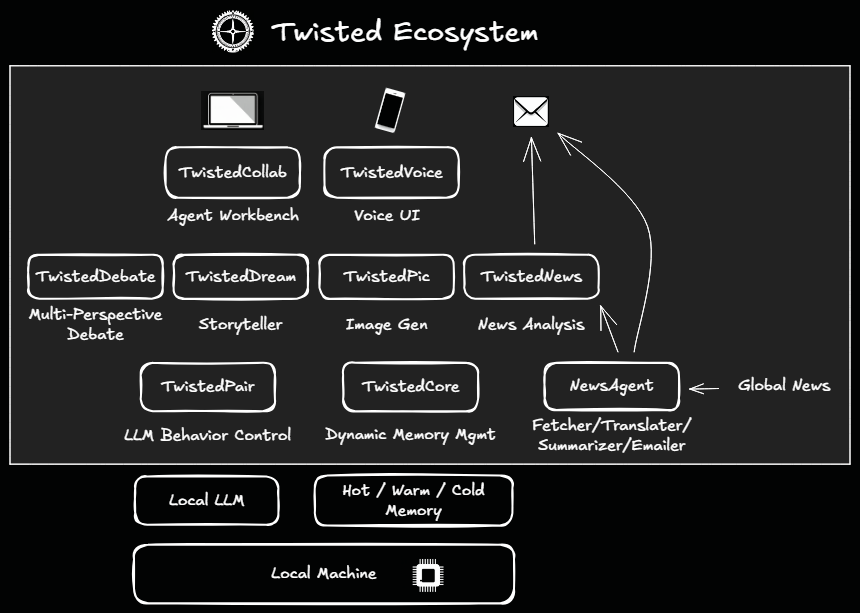
AI for Personal Autonomy and Independence: Leveraging Local LLMs and Creative Hallucination
Extended Publications
- S. Isaka, "Taxonomic Robot Identifiers: Toward General Classification and Oversight for Autonomous Systems," in IEEE Access, vol. 13, pp. 101801-101816, 2025, doi: 10.1109/ACCESS.2025.3578870
- S. Isaka, “A Taxonomic Classification and Identification System for Robots and Autonomous Systems: Abstract,” presenting at the IEEE Int. Conf. on Systems, Man, and Cybernetics (SMC), Kuching, Malaysia, 2024.
- S. Isaka, “Autonomy in Cognitive Development of Robots: Embracing Emergent and Predefined Knowledge and Behavior,” in Proc. IEEE 20th Int. Conf. on Automation Science and Engineering (CASE), Bari, Italy, 2024.
- S. Isaka, “An Ethological Analysis of Developmental Behavior in Machines," in Proc. 2023 IEEE Int. Conf. on Development and Learning (ICDL), Macau, China, pp. 79-86, 2023.
- S. Isaka, "Developmental Autonomous Behavior: An Ethological Perspective to Understanding Machines," in IEEE Access, vol. 11, pp. 17375-17423, 2023, doi: 10.1109/ACCESS.2023.3246840.
- S. Isaka, The Principles of Mental Care, Independent Publishing, 2018.
- S. Isaka, Practical English Training with Speech Recognition, Independent Publishing, 2018.
- S. Isaka and H.T. Nguyen. “Information triage for health literacy promotion”, Abstract for the 133rd Annual Meeting & Exposition, American Public Health Association, Philadelphia, PA, 2005.
- S. Isaka, "An empirical study on facial image feature extraction using genetic programming", Late Breaking Papers at the Genetic Programming 1997 Conference, Stanford University, pp.93-99, 1997.
- S. Isaka and V. Chu, "Industrial fuzzy control review: a perspective from feedback and manufacturing", Industrial applications of fuzzy logic, World Scientific Publishing, 1995.
- S. Isaka, "Fuzzy logic applications at OMRON", Industrial Fuzzy Control and Intelligent Systems, IEEE Press, 1995.
- B. Kosko and S. Isaka, "Fuzzy Logic", Scientific American, Vol.269, No.1, pp.76-81, July 1993.
- S. Isaka and A.V. Sebald, "Control strategies for arterial blood pressure regulation", IEEE Trans. on Biomedical Engineering, pp.353-363, Vol.40, No. 4, April 1993.
- S. Isaka, "Fuzzy temperature controller and its applications", Proc. SPIE Applications of Fuzzy Logic Technology, pp.59-65, September 1993.
- Z.Y. Zhao, M. Tomizuka, and S. Isaka, "Fuzzy gain scheduling of PID controllers", IEEE Trans. on Systems, Man, and Cybernetics, Vol.23, No.5, pp.1392-1398, September 1993.
- K. Mitsubuchi, S. Isaka, and Z.Y. Zhao, "A fuzzy rule generation", Proc. IFSA World Congress '93 Seoul, Korea, pp. 11-14, 1993.
- S. Isaka, "On neural approximation of fuzzy systems", Proc. IJCNN '92 Baltimore, pp. 263-268, 1992.
- S. Isaka, "On function approximations by fuzzy and neural systems", Proc. Int'l Symposium on AI in Material Processing, Edmonton, Alberta, 1992. (invited paper)
- S. Isaka, "On input space clustering by fuzzy systems and neural networks", Proc. IEEE Int'l Conf. on Systems, Man, and Cybernetics, Chicago, 1992. (invited paper)
- Z.Y. Zhao, M. Tomizuka, and S. Isaka, "Fuzzy gain scheduling of PID controllers", Proc. The First IEEE Conf. on Control Applications, Dayton, pp. 698-703, 1992.
- S. Isaka and A.V. Sebald, "An optimization approach for fuzzy controller design," Proc. American Control Conference, pp.1485-1490, 1990.
- S. Isaka, "On the design and architecture of adaptive fuzzy controllers and their application to a biomedical control problem," Ph.D. Thesis, University of California, San Diego, 1989.
- S. Isaka and A.V. Sebald, "An adaptive fuzzy controller for blood pressure regulation," Proc. IEEE Eleventh Annual EMBS Conf., 1989.
- A.V. Sebald, M. Quinn, N.T. Smith, A. Karimi, G. Schnurer, and S. Isaka, "Engineering implications of closed-loop control during cardiac surgery," Journal of Clinical Monitoring, 1989.
- A. Karimi, A.V. Sebald, and S. Isaka, "Use of Simulated Annealing in Design of Very High Dimensioned Minimax Adaptive Controllers," Proc. 23rd. Asilomar Conf. on Signals, Systems and Computers, 1989.
- S. Isaka, A.V. Sebald, A. Karimi, N.T. Smith, and M.L. Quinn, "On the design and performance evaluation of adaptive fuzzy controllers," Proc. IEEE 27th Conf. Decision and Control, pp.1068-1069, 1988.
- S. Isaka, A.V. Sebald, N.T. Smith, and M. Quinn, "A fuzzy blood pressure controller," Proc. IEEE Tenth Annual EMBS Conf., pp.1410-1411, 1988.
- S. Isaka, A.M. Schneider, P. Filia, K.K. Lue, R.D. Coutts, and V.L. Nickel, "A new tool for stroke rehabilitation study," Proc. 10th Annual Conf. on Rehabilitation Technology, pp.287-289, 1987.
Links
sisaka at visiondelmar dot com
©2004-2026 Vision Del Mar, LLC